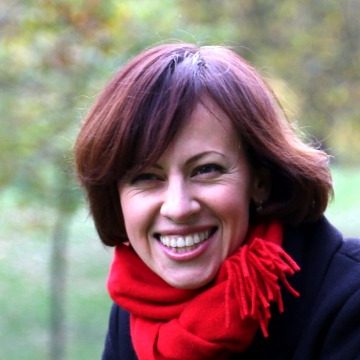
As is well known, the education system in England is divided into two sectors: private and state. And although most English children attend state institutions, parents strive to place them in private schools at the first opportunity. Elite education is also of interest to parents of children from Russia and other countries around the world. Diana Trachevskaya, director of James & William Education Consultancy Ltd, answers the questions they most often ask during consultations.
What does the name of your company mean?
Our company’s motto is wisdom, courage and determination, so we named the company after the finest representatives of the English nation: James Bond and William Shakespeare. One is a world-famous playwright, the other an invincible agent in Her Majesty’s service — Ian Fleming’s fictional hero, who became famous for his reckless courage, irresistible charm and nobility. By this we want to say that you must always try to achieve more, believe in yourself and in your children, and then everything will certainly work out.
What are elite schools?
These are world-renowned schools educating future politicians, heads of state, scientists and economists. For example, 71% of the judges of the UK Supreme Court and more than 50% of ministers are graduates of private schools.
Historically, schools whose history goes back many centuries used to admit only the children of the English aristocracy, but today they are more open, and even schools such as Eton, Rugby, Harrow School, Westminster and Charterhouse offer scholarships to gifted children from various walks of life.
Good manners and a traditional upbringing will always be valued by elite schools, but the criterion for admission today is challenging entrance exams. Our children also have a chance of entering such institutions, but it is a matter of serious preparation, timely registration, choosing the right option individually for each child, paperwork and, of course, the parents’ financial investment. The average cost of studying at a boarding school is around 30,000 pounds.
What are the special features of English education?
Unlike the Russian education system, English private schools do not limit themselves to academic subjects alone. The school’s goal is to bring up a well-rounded personality, because the world’s best universities are not just looking for top students — they need creative and progressive students who can quickly navigate a huge amount of information, but most importantly, make decisions independently.
Each school has its own history, its own rules, dress code, manner of communication and even the slang the pupils use. In total there are about 2,500 private schools in the UK, and they are all united by teaching and upbringing methods refined over centuries. The infrastructure of English schools and their facilities impress everyone: assembling a car in the huge design and technology block of Oundle School will not leave future engineers indifferent, while the ultra-modern recording studios at Hurtwood House, meeting world professional standards, will appeal to future musicians. Alongside mathematics and physics, modern English schools offer the chance to learn to fly a helicopter and sail a yacht.
Do you recommend sending children to boarding schools?
Absolutely, yes. In 15 years of working with children, I have never met a child who changed for the worse after going to a boarding school. Of course, it can be hard to get used to strict rules of conduct, the etiquette of communication and a new way of life in a new country, but all these difficulties only teach discipline and independence. It is an opportunity to prove to yourself and to others that you can cope.
Who will look after the child if the parents live far away?
Under British law, every pupil studying at an English boarding school must have a guardian. This is a person whom the school can always contact if various problems arise. The guardian attends parents’ meetings, acts on the parents’ behalf in making various decisions, informs parents about academic progress and, in general, serves as the link between the school and the pupil’s family. Our company offers Russian-speaking specialists with experience working in schools, with whom you can always discuss current matters.
When should you start thinking about enrolling a child in a private school?
I always tell parents: the sooner you think about your child’s future, the better. Parents of children aged 16-17 often come to me, but it is quite difficult for students of that age to enter a school. They already have their established habits and rules, which will be almost impossible to change. Moreover, the entrance exams for 6th Form (the last two years of school) at many elite schools include not only English and mathematics, but also the subjects the student wishes to study further. And writing tests, for example in economics, history or biology, in English is difficult even with good preparation.
I believe that the most suitable age to enter a British private school is 12-13, when there is still time to look around and try studying various subjects, and children of this age find it much easier to take in everything new. At 14, students in private schools move on to the two-year GCSE course, and one must be ready for that step.
What difficulties arise when selecting schools?
Every child is unique, so my task is to correctly determine their level of knowledge and character traits, as well as to identify talents and offer suitable schools and an appropriate preparation programme.
By profession I am a teacher; I began my career in the UK in English schools, working with children who had difficulty adapting to English schools. I am often approached by parents whose children have poor English or are not top students in Russian schools. I work with difficult cases and believe that every child has a talent, a special quality, that simply no one noticed before. I take an individual approach to each one and love all of my charges very much — they are now studying successfully at school.
I work with a professional team of teachers with many years of experience, who prepare children for interviews and entrance exams, and also supervise pupils during their studies.
Are there specific problems for children with a Russian mentality?
The creaky English floors in the residences, a little like those shown in the Harry Potter films; lightly dressed children in knee-high socks, which in some schools is part of the uniform even in winter; and the coolness of the English in communication — these may at first be unusual for Russian children, but over time they integrate perfectly well. One of my students, for example, is now captain of a team in the traditionally English sport of rugby and possibly a future player for the England national team, although back in Russia the boy had never played it.
What recommendations can you give?
Being located directly in England, we provide a full package of services for admission to private boarding schools. This also allows us to stay abreast of all events on the education market and to offer only first-class and well-established institutions and teachers.
We invite parents interested in their children studying in the United Kingdom to be sure to visit the schools and get a feel for their atmosphere. We organise visits to institutions where you can not only see their infrastructure but also talk to the headteachers, teachers and pupils, learn about the schools’ history and see the conditions in which students live.
The summer holidays are also approaching, when many British elite schools and renowned universities offer a variety of programmes for children and parents: specialised English courses for students, English plus golf, tennis or horse riding, and academic programmes preparing for entry to schools and universities. This is a unique chance not only to have a good time and improve your English, but also to broaden your horizons. We will be glad to select the courses and programmes that interest you.
We will be delighted to discover England for you!
Interview in Rutage Magazine, April 2017